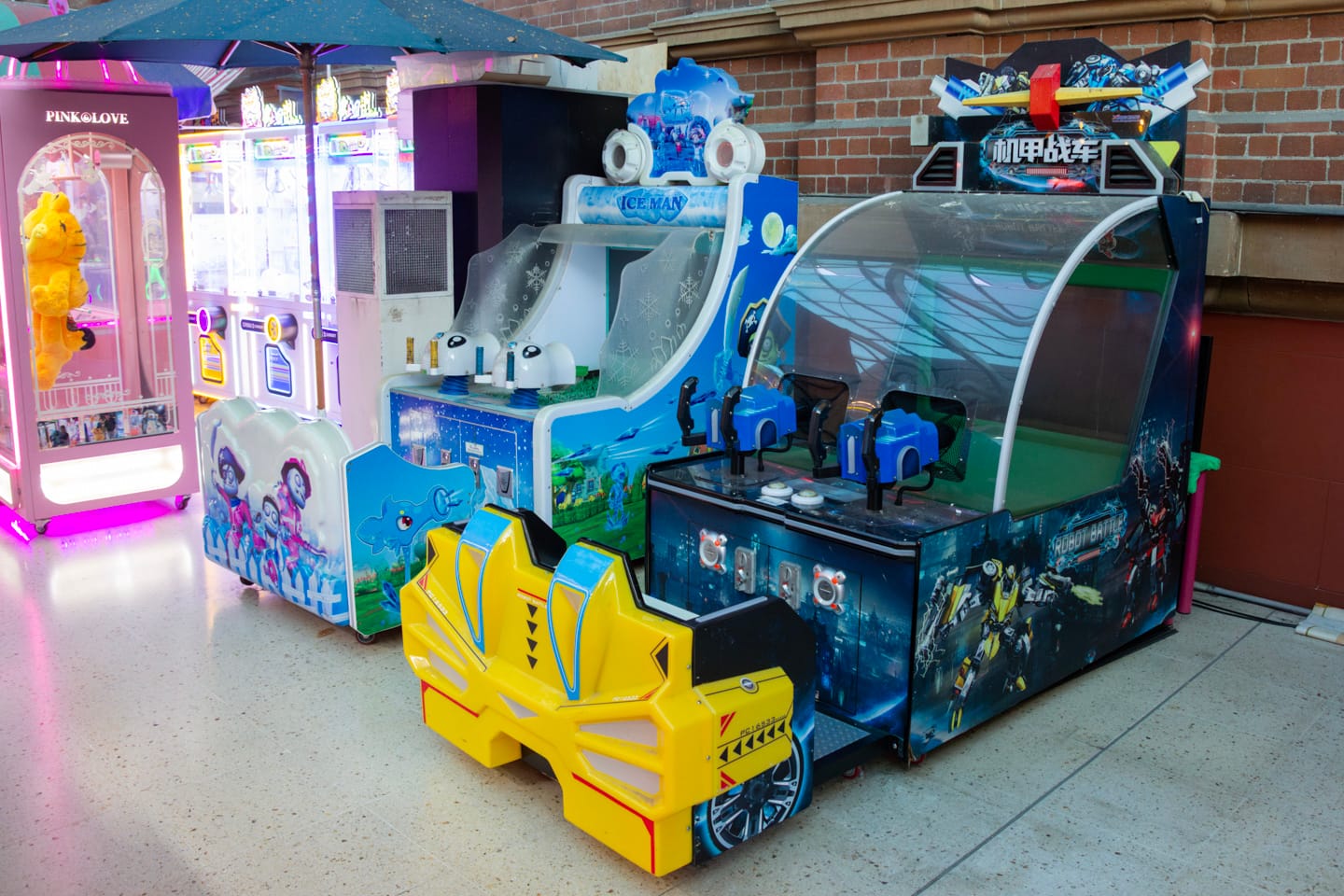

Purikura Photoland – Part III: Where To Now?
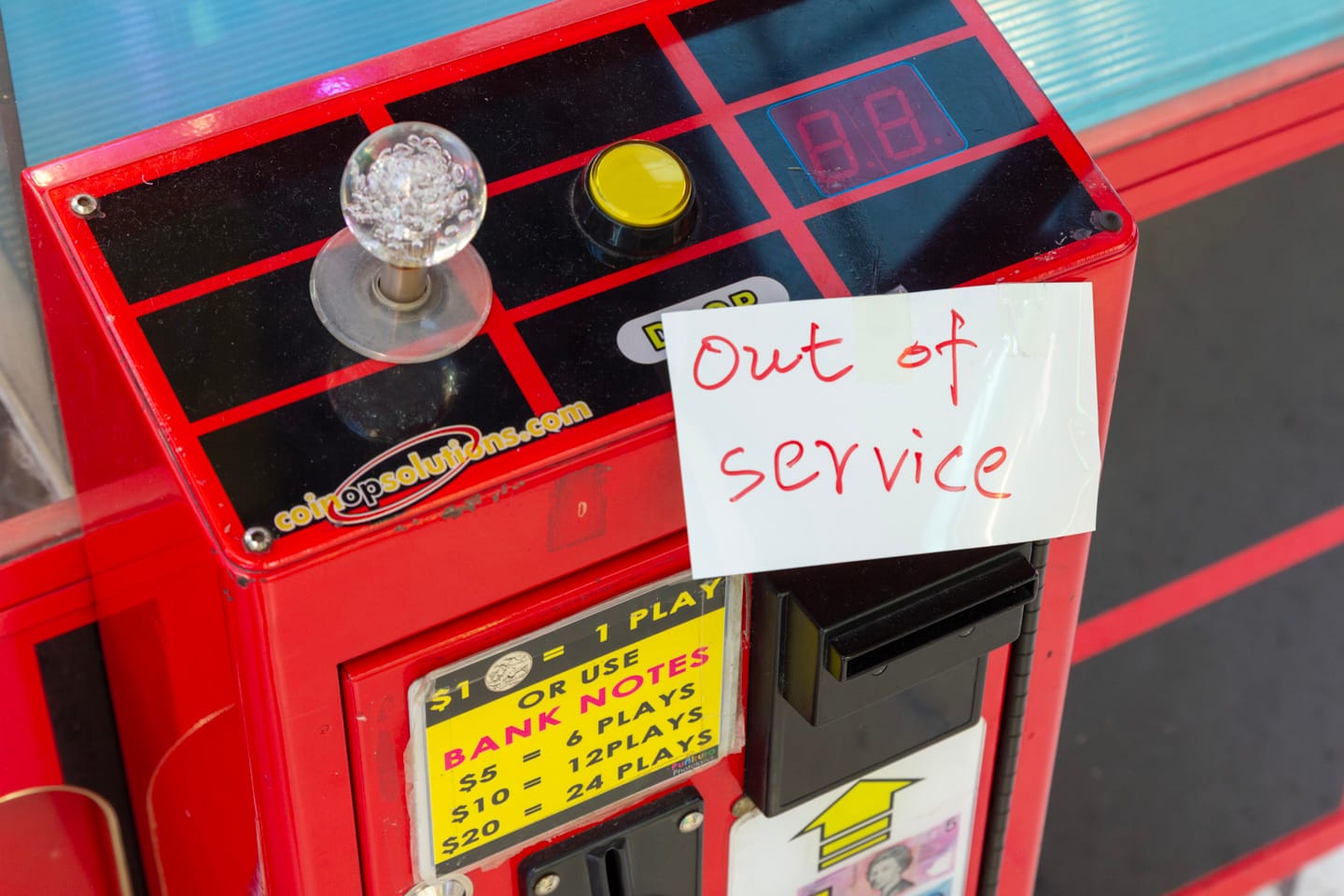
Purikura Photoland was nothing like a minimally interactive photo booth and a single Chocolate Factory or Stacker machine in a local shopping mall.
So the question on people’s minds upon learning of the closure was: where now? How does one experience “arcade, Japan” at a similar scale, now that it’s gone?
Fortunately, there are places scattered around the Sydney CBD – some new, some old – that have made a name for themselves, whether it be through effective marketing or (better still) through their customers.
However, I’ve found each activity a mixed bag: Some places are tried and tested, others don’t quite hit the same, and one just downright doesn’t have an alternative that exists.
And so here are my findings, based on the limited knowledge of a somewhat non-cultured Sydneysider. Though, a little bit about my background if you stumbled upon this page from a search:
how non-cultured/travelled are we looking at?
- I only have Discord and private messaging apps. That means zero exposure, viral influence, or knowledge, of any stores on public social media unless I intentionally look for them. It’s a double-edged sword for the intents of this article.
- When I go into town, I hang around a very specific area from Town Hall to Central. I’ve drawn it on a map you can check out in Part 1.
- I sometimes visit other places around the Inner West. Particular mention to Burwood, an OG visitor before it had the “Chinatown that isn’t Chinatown”, and Cabramatta, where my grandparents would take me along their fixed course through John Street and its arcades saying hi to their friends who had opened business here.
- I help exhibit and host rhythm games at anime conventions. Main one being SMASH!, but looking to expand. Sponsored stores and other exhibitors who have attended here will form a part of my knowledge.
tl;dr: just tell me the places!
I respect that. Google Maps links where appropriate:
- Japanese (Purikura-style) booths: None that I’m aware of. They would be a feature in specialist stores or hidden parts of town.
- Korean (Life 4 Cuts-style) booths:
- Rhythm games:
- Puri refugee (SDVX* & IIDX, both online): Koko 614.
- DDR (white*, gold), GITADORA: Timezone Market City at Haymarket.
- “Dead” games: (ITG, O.N.G.E.K.I., jubeat, WACCA, pop’n music, Project DIVA, crossbeats, maimai FiNALE): CityHeroes 505. I occasionally maintain the ITG cab.
- Other games not mentioned: any arcade with regular visitors will do. Games above are exclusive/only found at those places, except for * which are just my recommendations. Best bet is to check Zenius -i- vanisher’s arcades directory, whose information on quality is updated and crowdsourced by visitors.
- Prizes (not quite the same offerings):
- Joystick, opposite World Square.
- Any Koko or Timezone, if the prizes interest you.
- Million Life (not recommended).
- Gashapon:
- Isekai Gacha, Liverpool Street, end of Dixon Street’s alley. Hobbyist-run, so it’s reliable.
- Gacha Gacha walls, located around the CBD.
Uncertainty: Purikura Booths
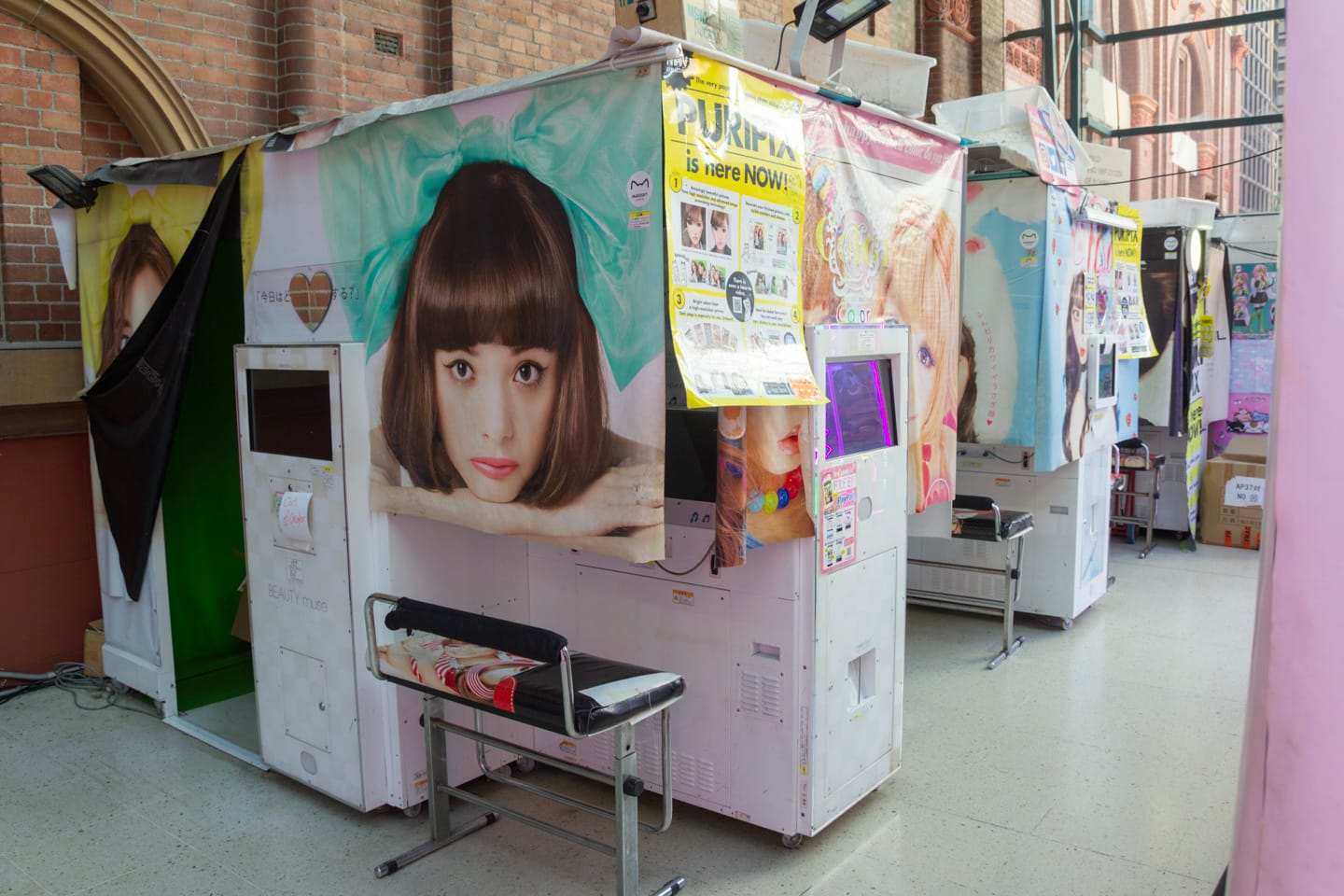
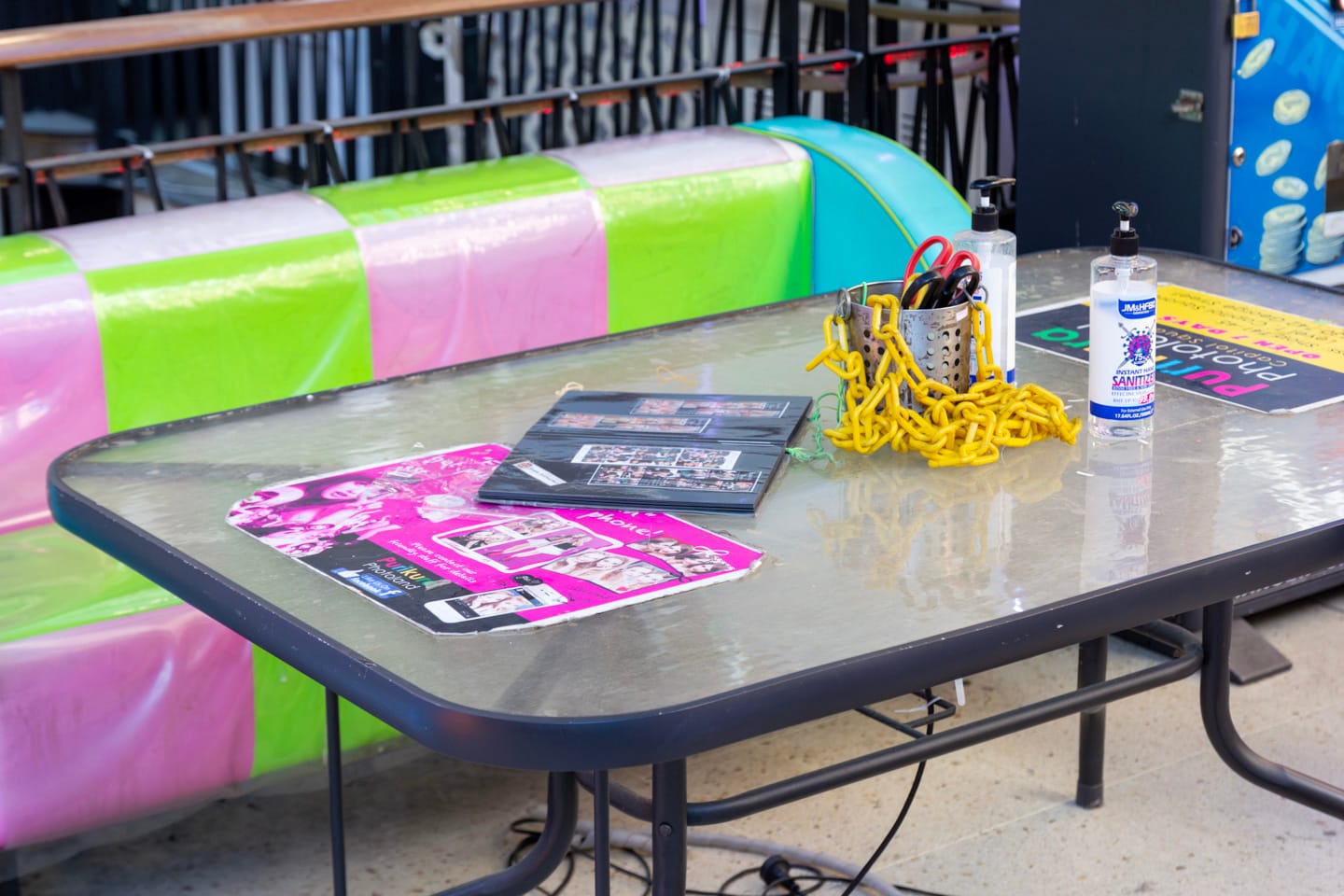
If you’re looking specifically for purikura that has its roots in the concept of editing photos, be it drawing or placing stickers yourself, or through the booth’s automatic (?) eye-enlarging, height-elongating features central to kawaii culture, that might be tough. (Spoiler alert: I actually have no clue, but I don’t doubt you’ll be in for a real challenging hunt.)
If just a photo booth experience or keeping to something more natural is fine to you, thankfully, Hama Film [CBD Google Maps] and Happy Cap [website] are both names I’ve heard through promotions in anime conventions. These franchises host Korean-based Life 4 Cuts booths, so they have a more toned down, realistic approach to photos.
As of when I wrote this at the very start of 2026, those are the prevalent names in the Sydney city and its surrounding regions. It would be wise if the successor to Puri opens in Burwood, given both those two stores have a shop there. Or maybe not, as that’d make it too much competition…
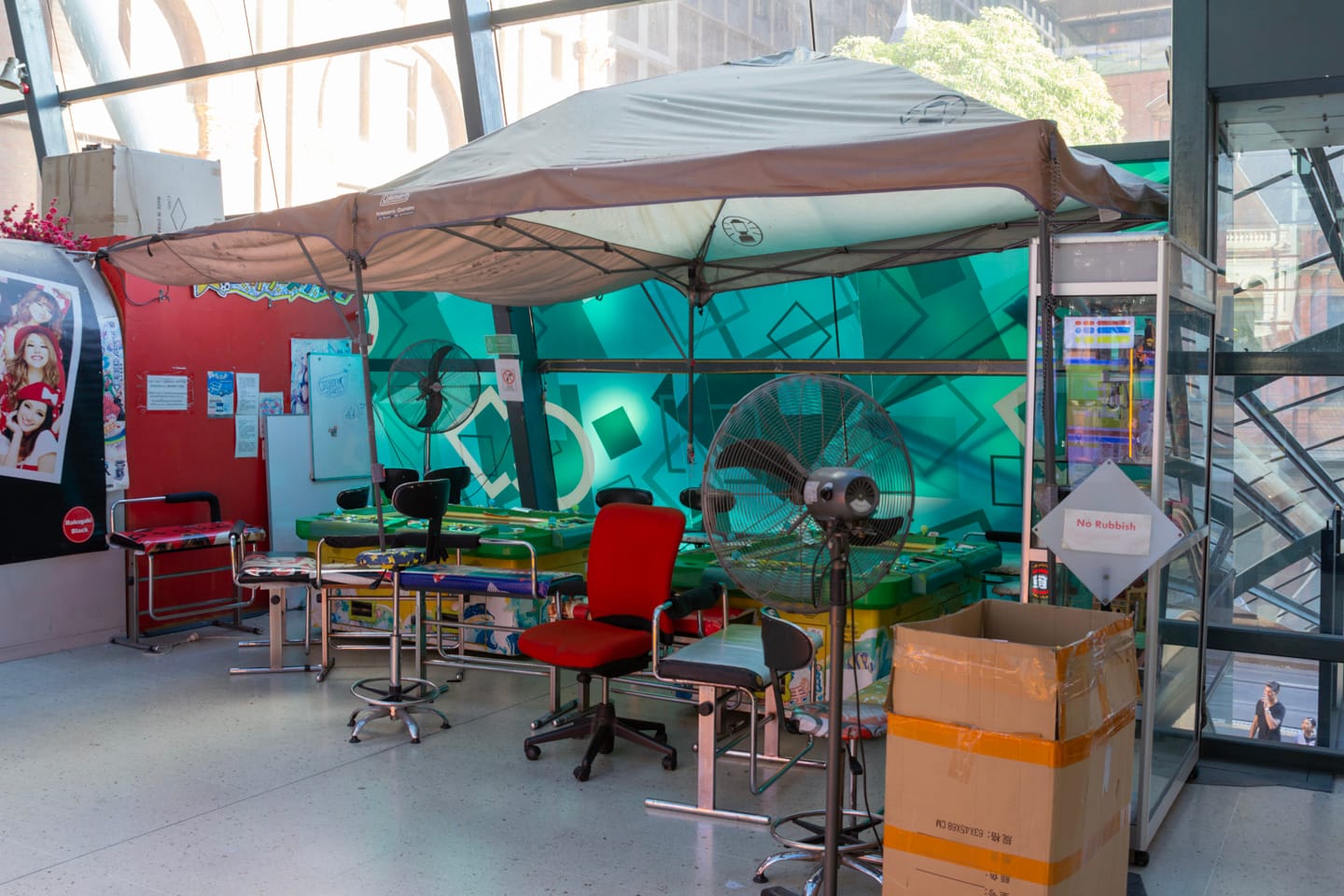
Certainty: Rhythm Games
Puri closed and sold its rhythm game cabinets a few months earlier in June. No longer were the days we could speak directly with the boss or his son about fixing a faulty button or turntable and getting it resolved in a matter of hours to days. (Compare with Timezone, where their strict protocols and priorities meant fixes were on the magnitude of months to years.)
As a game that scores you based on performance, players need utmost reliability on the controls that they interface with, so maintenance is an absolute must. In fact, it’s the only thing that matters. Would a professional eSports player risk losing on gear that fails? Same idea. “What? Rhythm gaming is now an eSport?” Yes, it is.
Photo booth connoisseurs – I’m not in the know of any recurring pet peeves you may find yourselves in, but I’m sure even you have expectations that a technician, who may stick to their guns on how to fix things, are troubleshooting responsibly with an appropriate arsenal.[1]
Unlike the purikura booths at Puri, where once it was gone you were shit outta luck, the rhythm gamer gang were fortunate to be afforded choice. But things weren’t quite the same.
timezone
📍 Haymarket inside Market City, and Central Park (Google Maps links).
- Apart from the promptness issue, players have to use seemingly drastic measures, mainly review bombing (criticism or praise), to gain bare minimum attention when attempts at in-store or non-public facing escalation proved fruitless. The SDVX AUS server often cites Market City’s cabinet, the next closest option after Puri, as a meme; there are more photos and videos of the cabinet broken than in its working condition in the form of score posts. To be fair, it is more public facing, which means it’s been subject to some… odd handling 🍦
- Other popular games like DDR and maimai DX are of superior and reasonable quality, respectively. In fact, DDR’s white cab (not gold) is a favourite amongst the players.
- Come here to play GITADORA (the premium Arena Model), both guitar and drums. Bring your own drum sticks, as you never know when the provided ones will give out, let alone knowing when it will be replaced, when the time comes.
- Just like Puri was, it’s an easy and accessible place for players, a five minute brisk walk away from Central Station.
koko & cityheroes
📍 George Street’s 505 down the escalators entering Event Cinemas, 614 across the road, Haymarket’s Dixon Street (technically), and other places out of the CBD (Google Maps links).
- Koko is doing a lot better on the listening to feedback front since they are actively striving to push themselves as the spot for rhythm arcade gaming. Though, they also do take a minimalist approach to fixes and sometimes use band-aid solutions (but I suspect this is due to a lack of specific knowledge). As long as it’s not out of service, any prompt hack is as good as fixed to them – and to us, if it works well enough and doesn’t destroy the machine.
- Maintenance turnaround is definitely shorter than Timezone, but that is an extremely low bar to compare against. Don’t expect them to be as prompt as Puri.
- A large variety of games. 505 has what we like to call the “dead game corner” for all the niche titles, including an ITG cab that I occasionally maintain.
- 614 is the new place for Puri’s SDVX players.
- It’s right outside one of the exits of Town Hall Station – if you commute there. Otherwise, it’s about a 15 minute walk from Central Station.
Therefore, you could say the quality of these arcades boil down to player trust, which can be represented on a sliding scale:
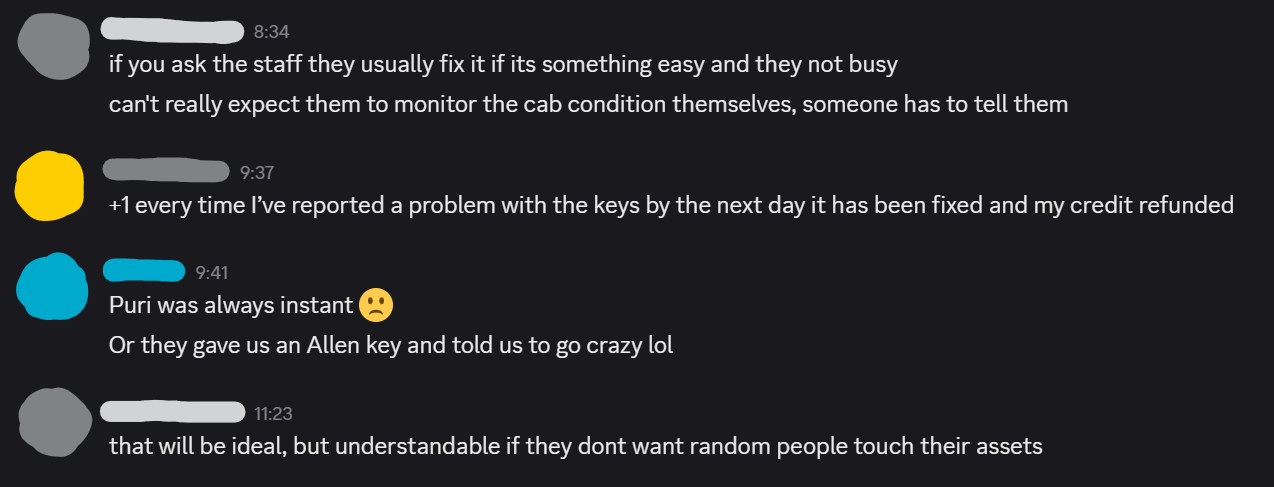
- Puri, humble in its absence of specialist knowledge, puts their trust in us on telling them what’s wrong, how one would sort it out, and then letting the players fix it. If it’s known to take 10 seconds, it’s sorted in 10 seconds.
- Koko would be in the middle, their techs open to suggestions and being taught da wae.
- Timezone, presumably due to warranties and liabilities, have no choice but to rely on the technicians they hired, not the players who best know their game inside out. They once went as far as scorning volunteer input, saying it has an “unprofessional look” (actual words from years back), so they could be considered far on the other end of the scale.[2]
Indifference: Prize Machines
Ah yes, the claws and the UFO catchers… like rhythm games, there are no shortage of alternative stores that host these.
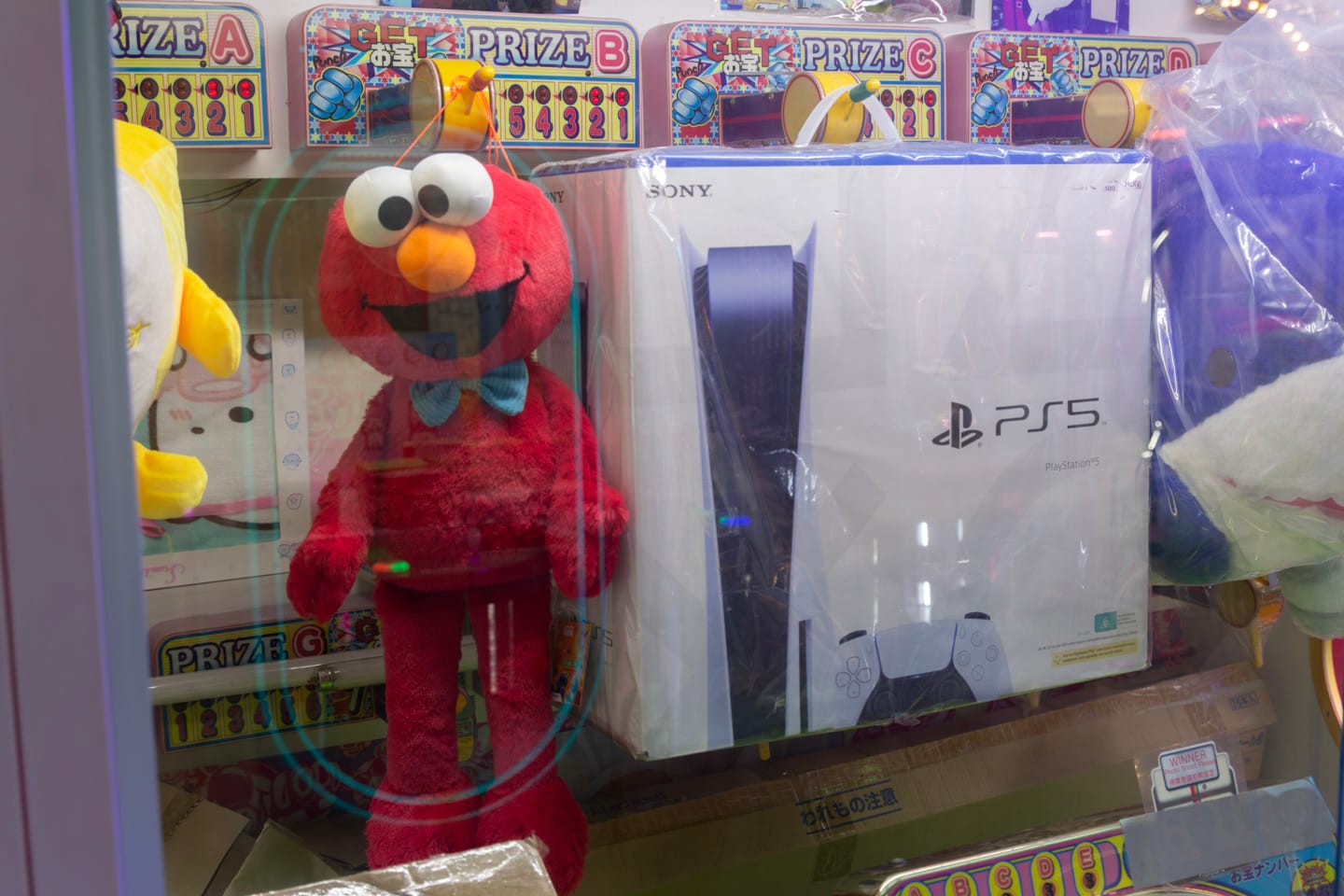
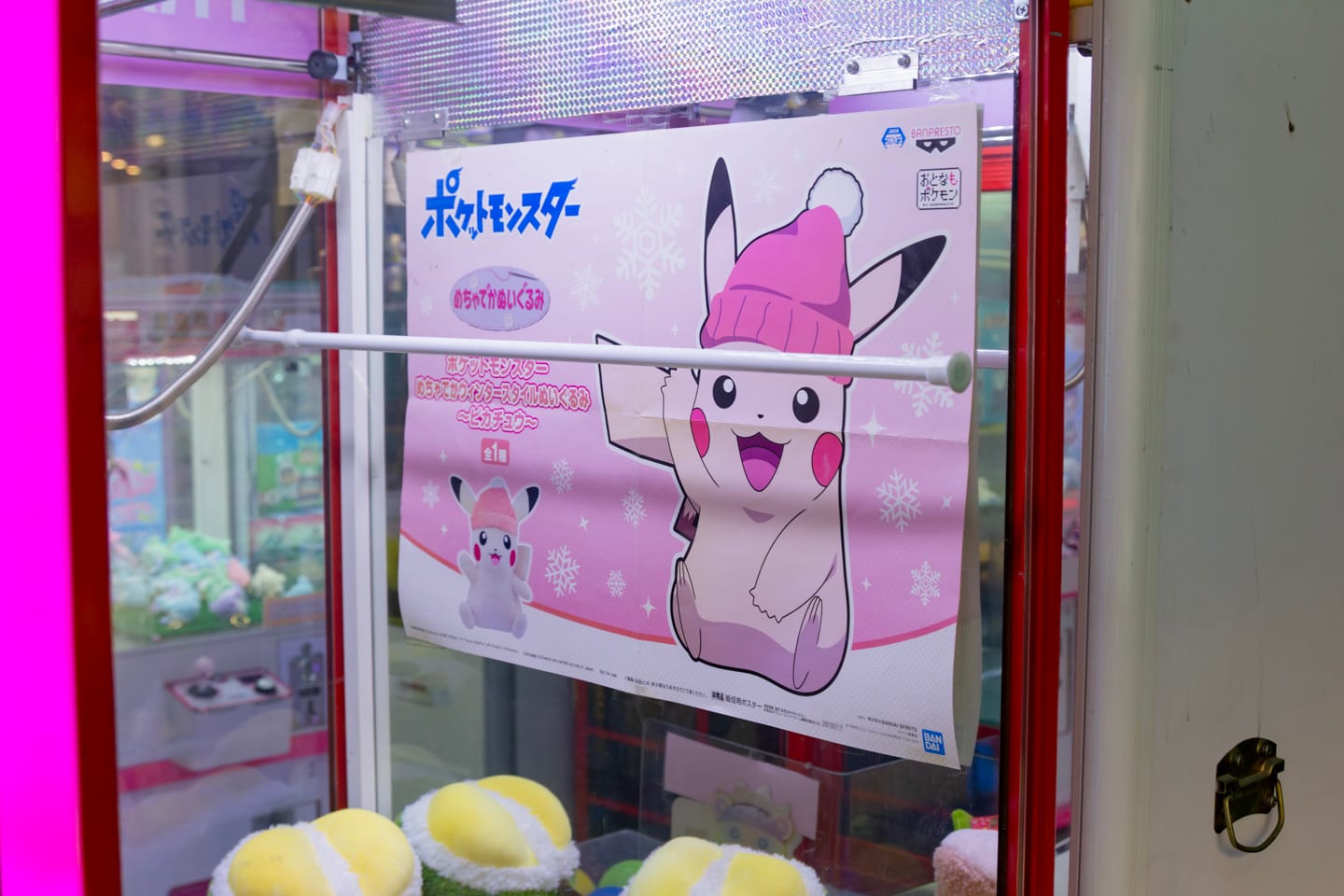
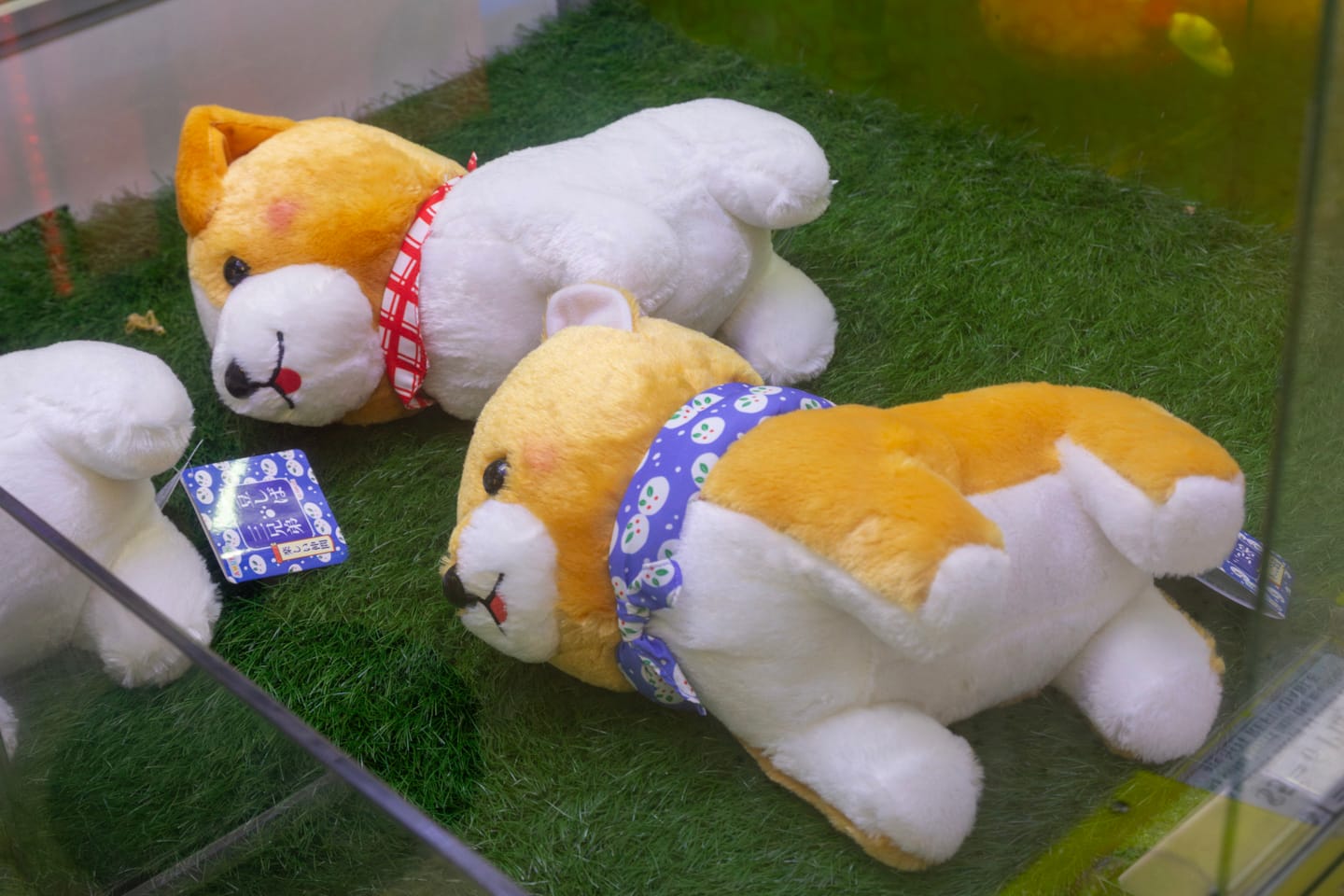
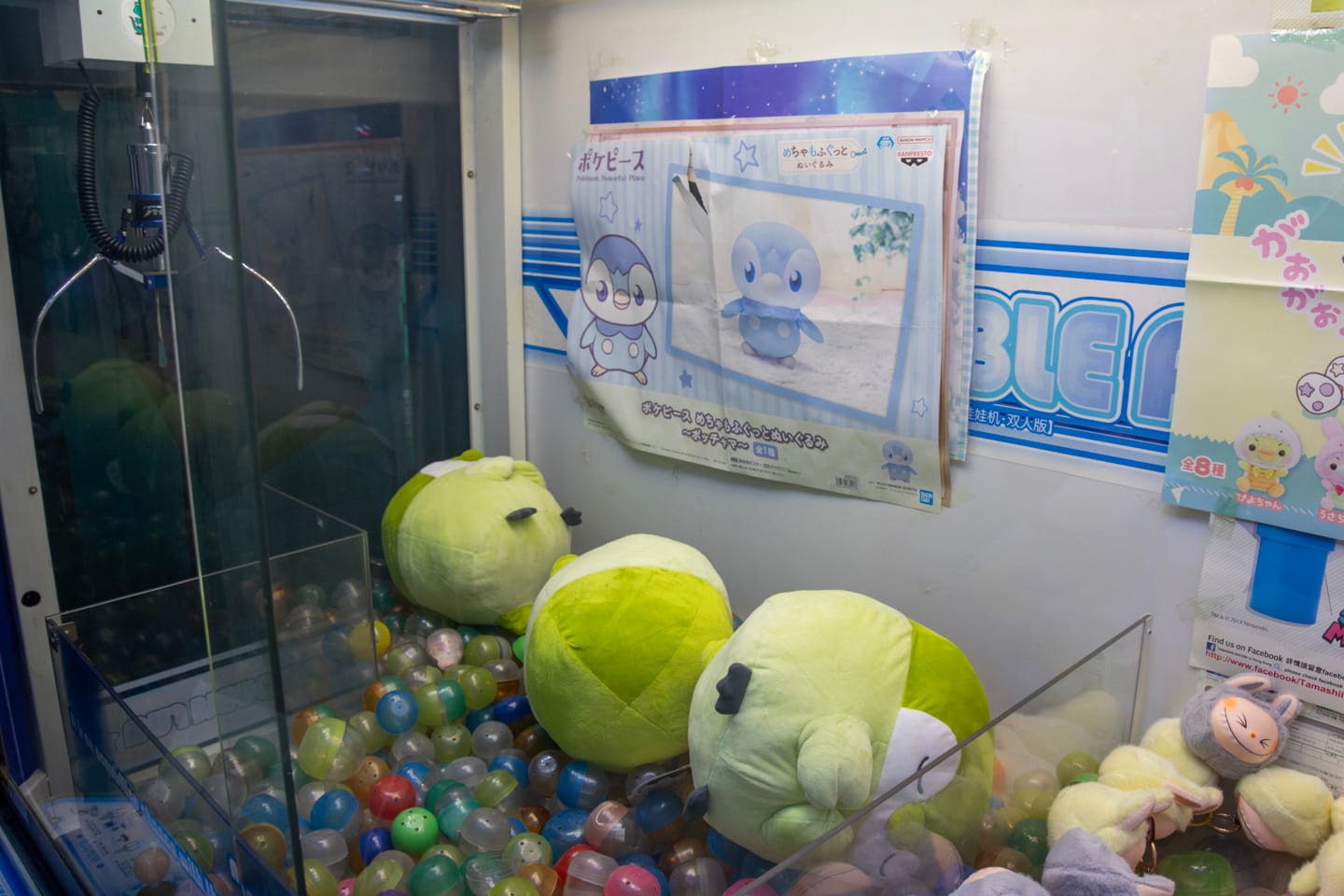
rumour has it that ps5 is still there and elmo’s had enough of it. also yes those are durians
Well, when I say “no shortage”, what I really mean are places like Million Life (mostly) and Joystick, which wouldn’t be too far off treated similarly to how one compares Timezone and Koko, respectively.
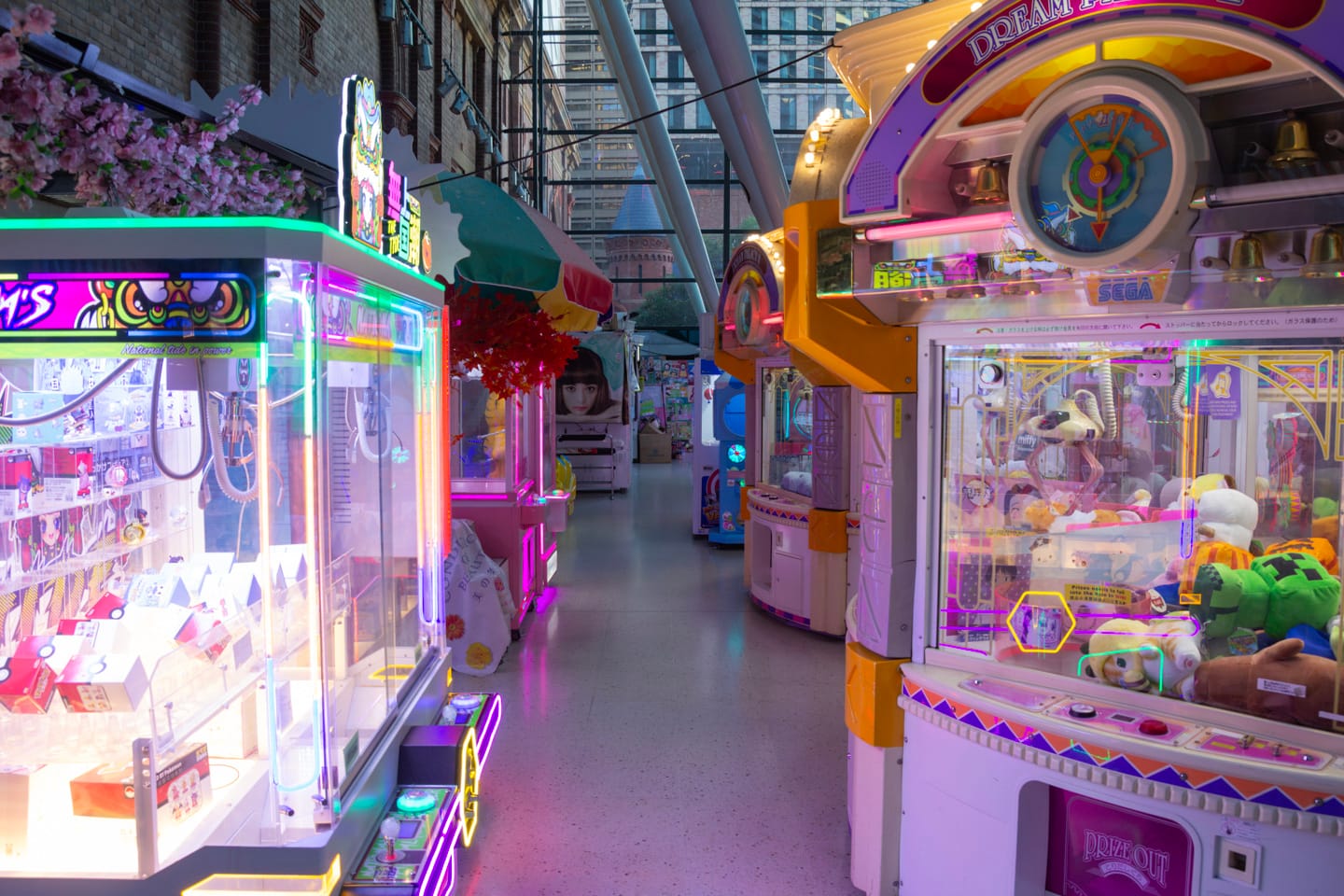
But both Million Life and Joystick have this different, intentional vibe: they’re excessively bright in comparison to Puri, akin to how a night owl has to squint their eyes going out under the full blast of the midday sunlight (ahem).
Million Life, as far as I’ve witnessed, appears to be mostly unmanned. The passer-bys who visit them are also few and far between.
Joystick’s interiors are bordered with animated LED screens. Modern East Asian-esque, no doubt, but I dunno… does one expect a small, cosy bar to be as brightly lit as a MECCA store with its own ceiling-height LED display?
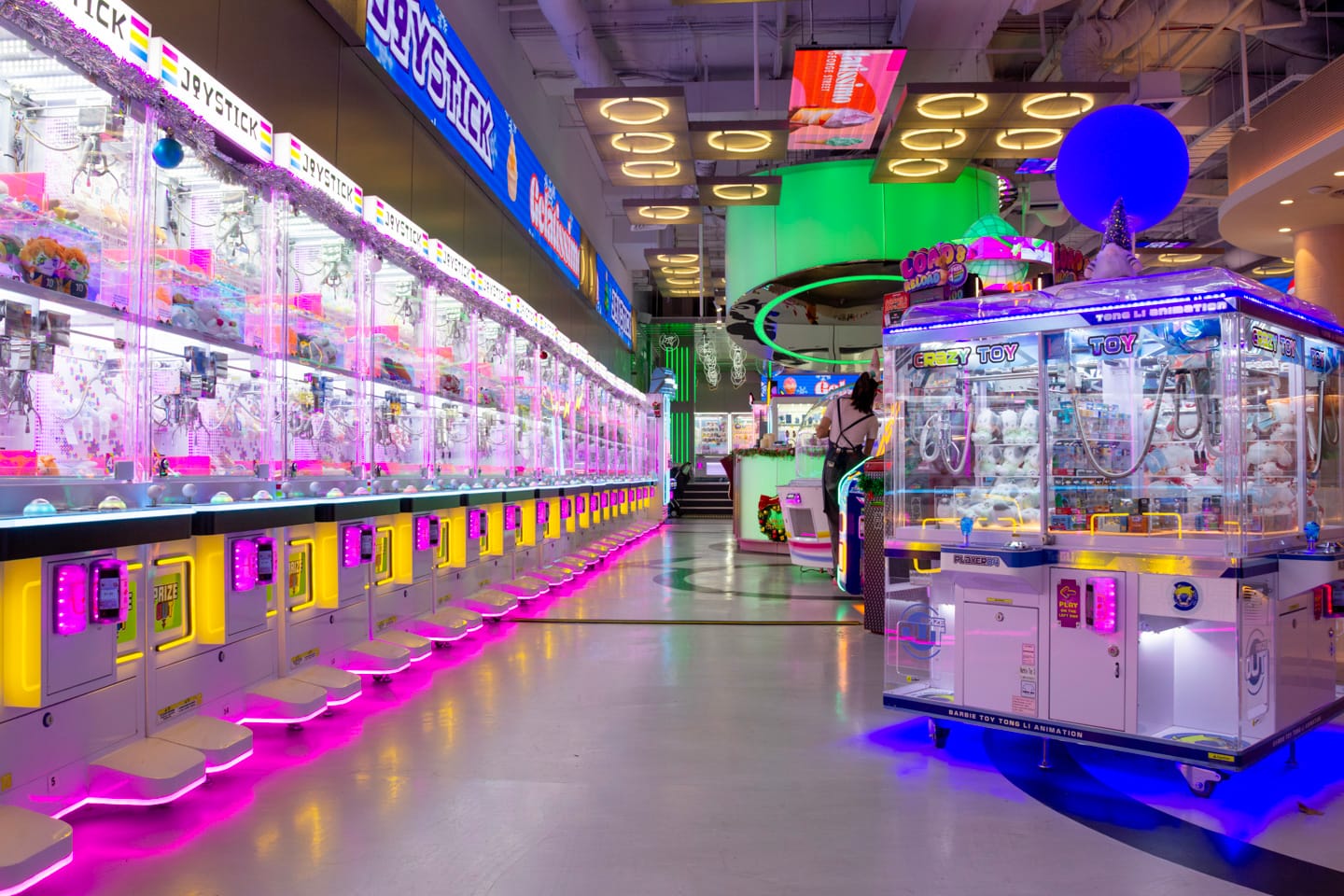
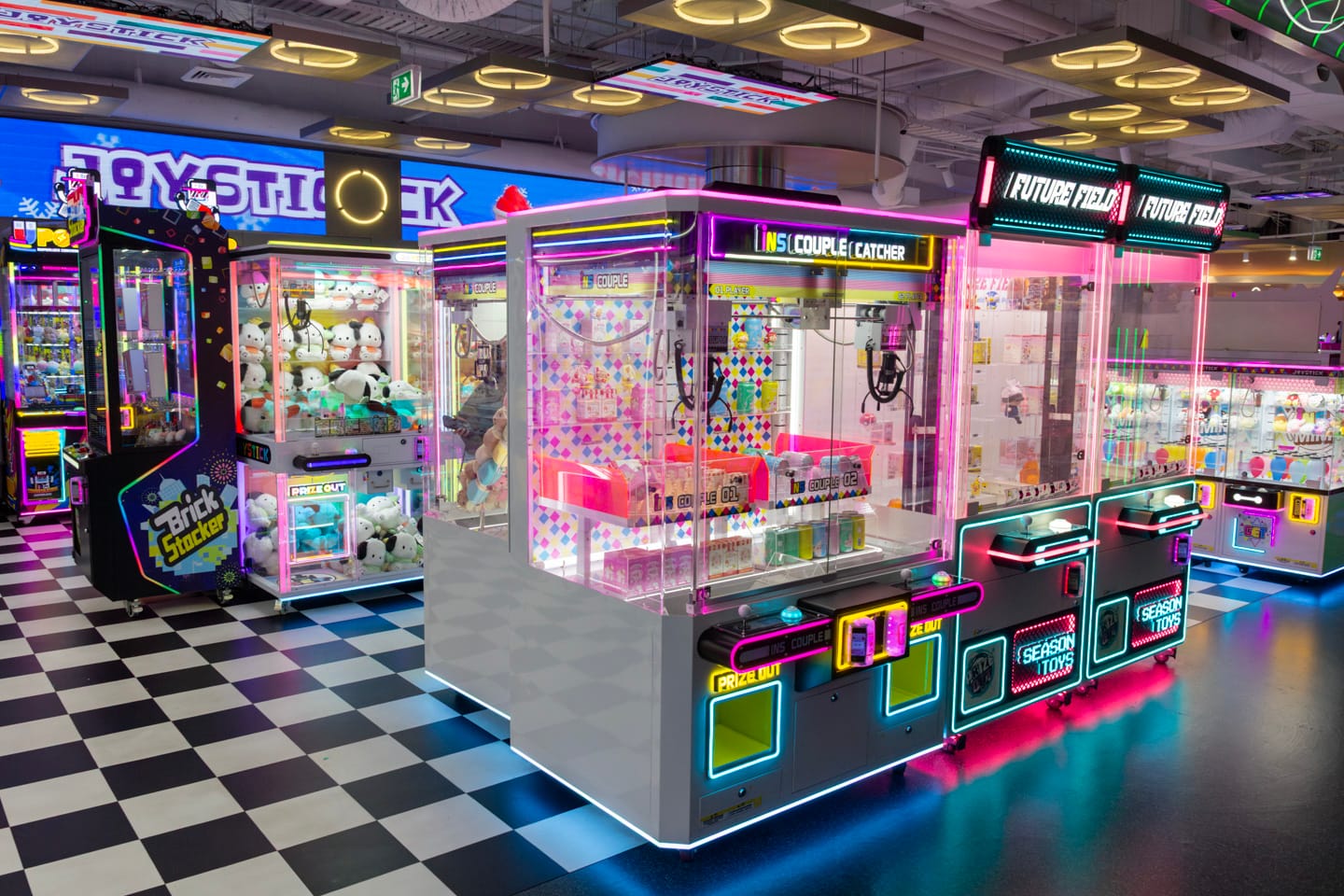
joystick has led displays mounted on the ceiling. now that’s next level
The win rate at Puri was considered lower than those at Timezone and Koko, but Puri occasionally stocks official prizes. Koko (and presumably Joystick, based on their similar marketing visual aesthetics), being a Chinese-owned arcade, will tend to stock Chinese IP merch or licensed reprints. I’ve never been inside a Million Life, so I can’t vouch for the authenticity or range of their products.
There’s something about each shop’s layout that I can’t quite put my finger on. Both Puri and the new stores have lots of machines arranged into a tightly packed layout, although… maybe it’s the fact that Puri had the most floor space. Maybe it’s the positioning of the cabs – wait, the reason is graph theory?!
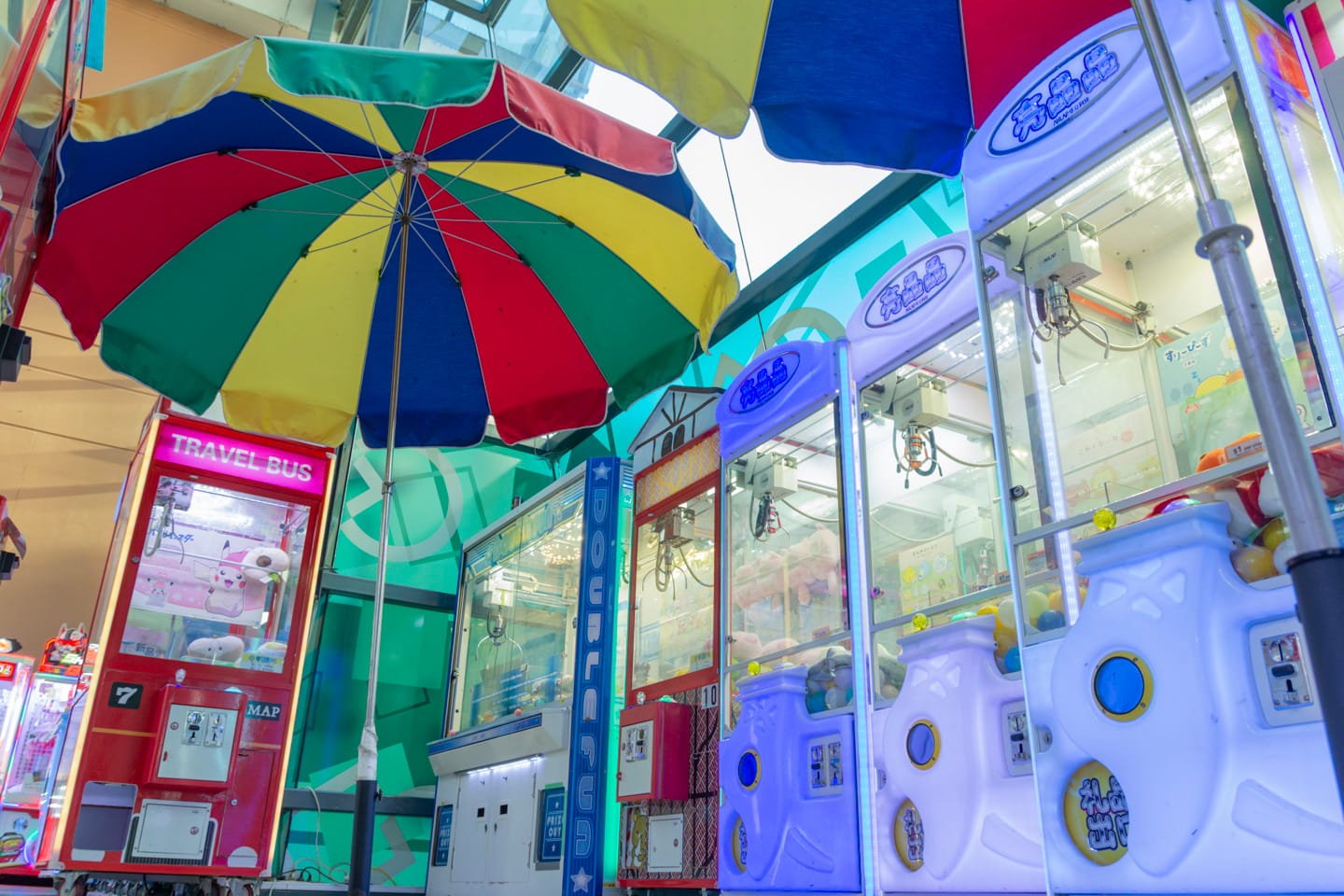
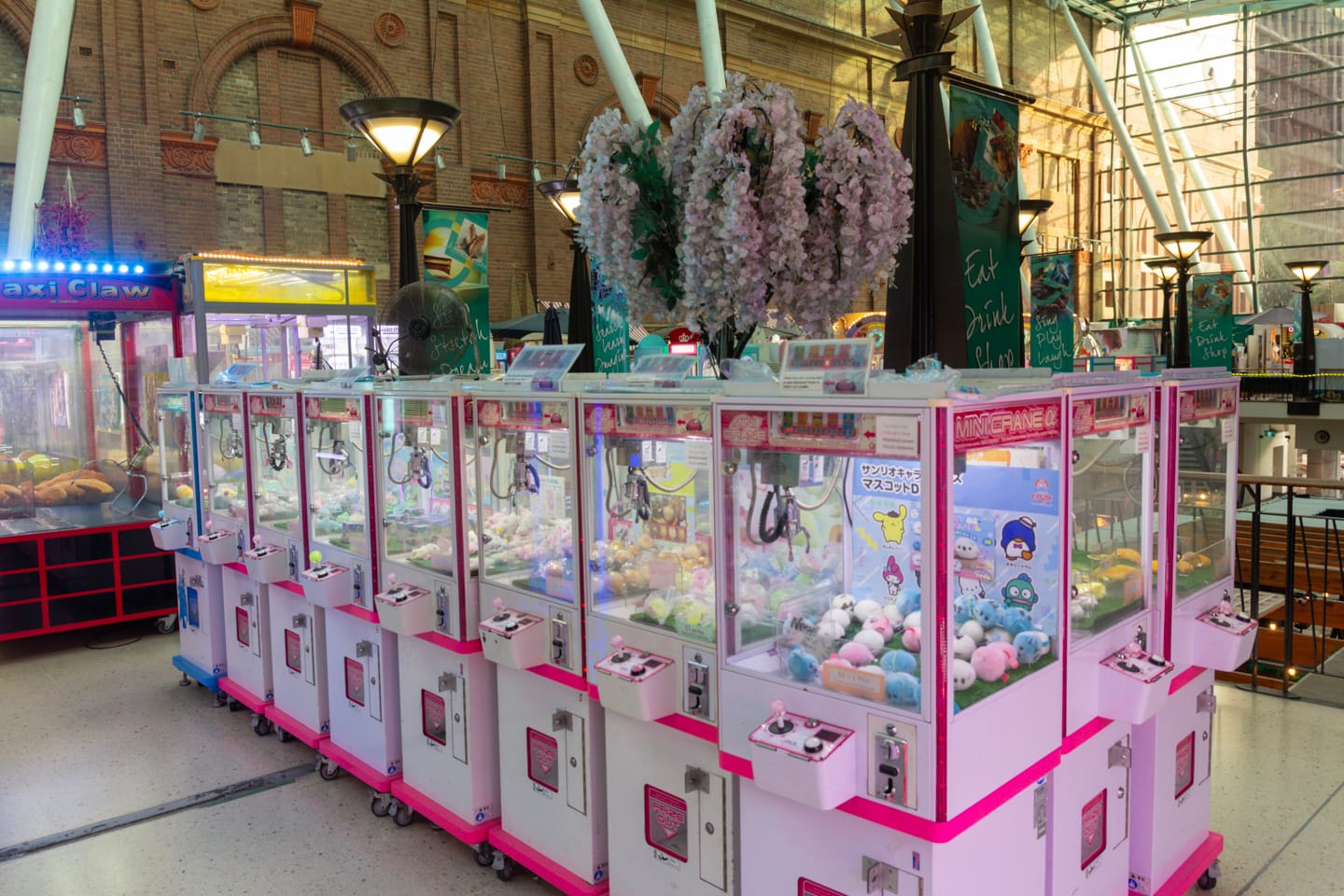
Puri felt like a place you could leisurely walk laps around. That after school date hangout? (“D-da– wh… nAOww, it’s nothing like that. We’re just visiting!”) Yeah, you never felt rushed or compelled to follow or find a set path.
Million Life – and Joystick, to some extent – instead felt like a factory. You both go in, subconsciously try to optimally visit every machine in one go (Million Life’s stores are essentially just a circle), play a few that interest you, then come back out to the entrance.
Another round? …Nah. We good.
You sure you didn’t want a second look at anythi– …Yeah, let’s go.
It could also just be that the store’s selection of available prizes weren’t appealing to either of you. Like I said, I don’t quite know what that x-factor was. But one thing’s for sure.
puri just hit different.
Null: Gashapon
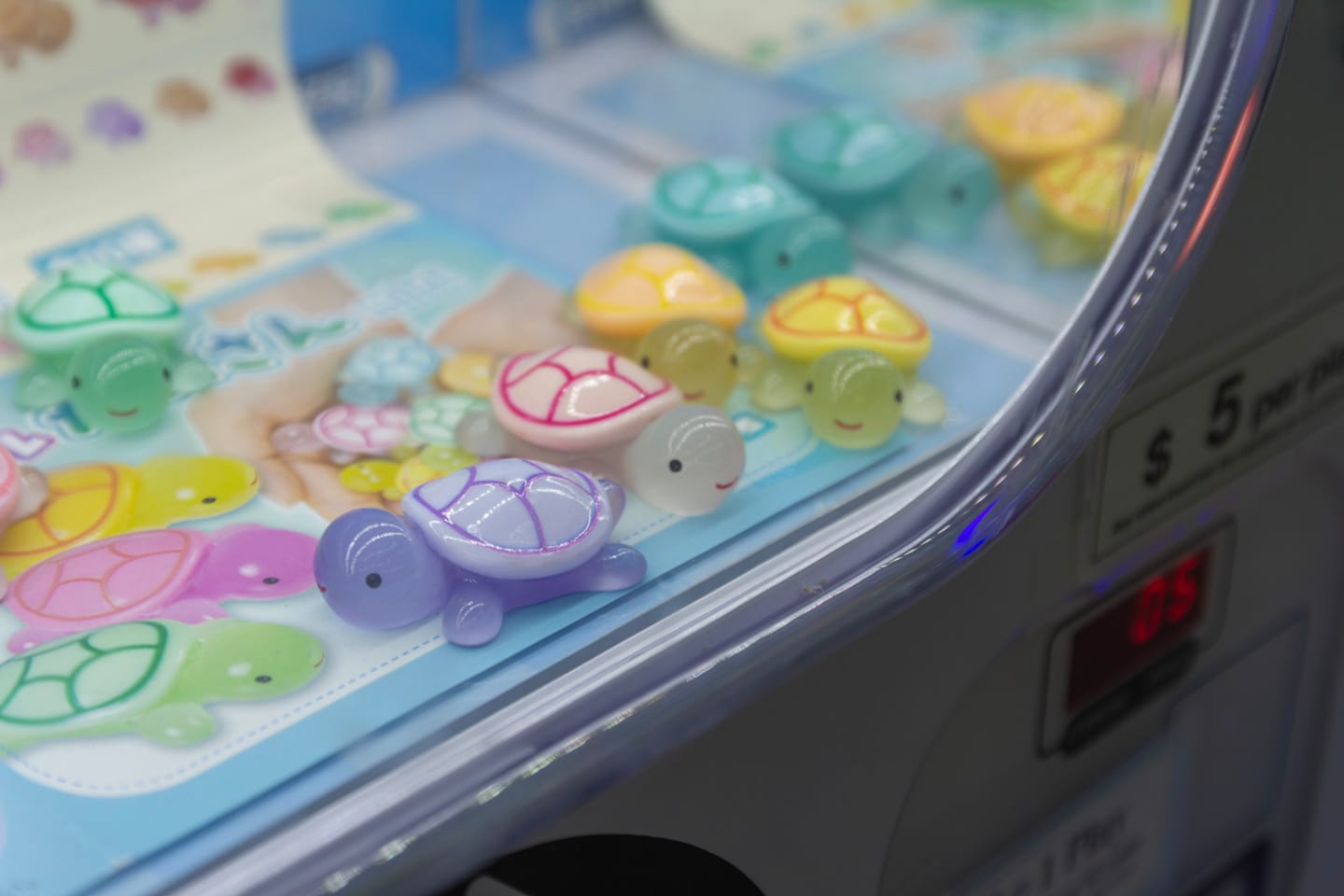
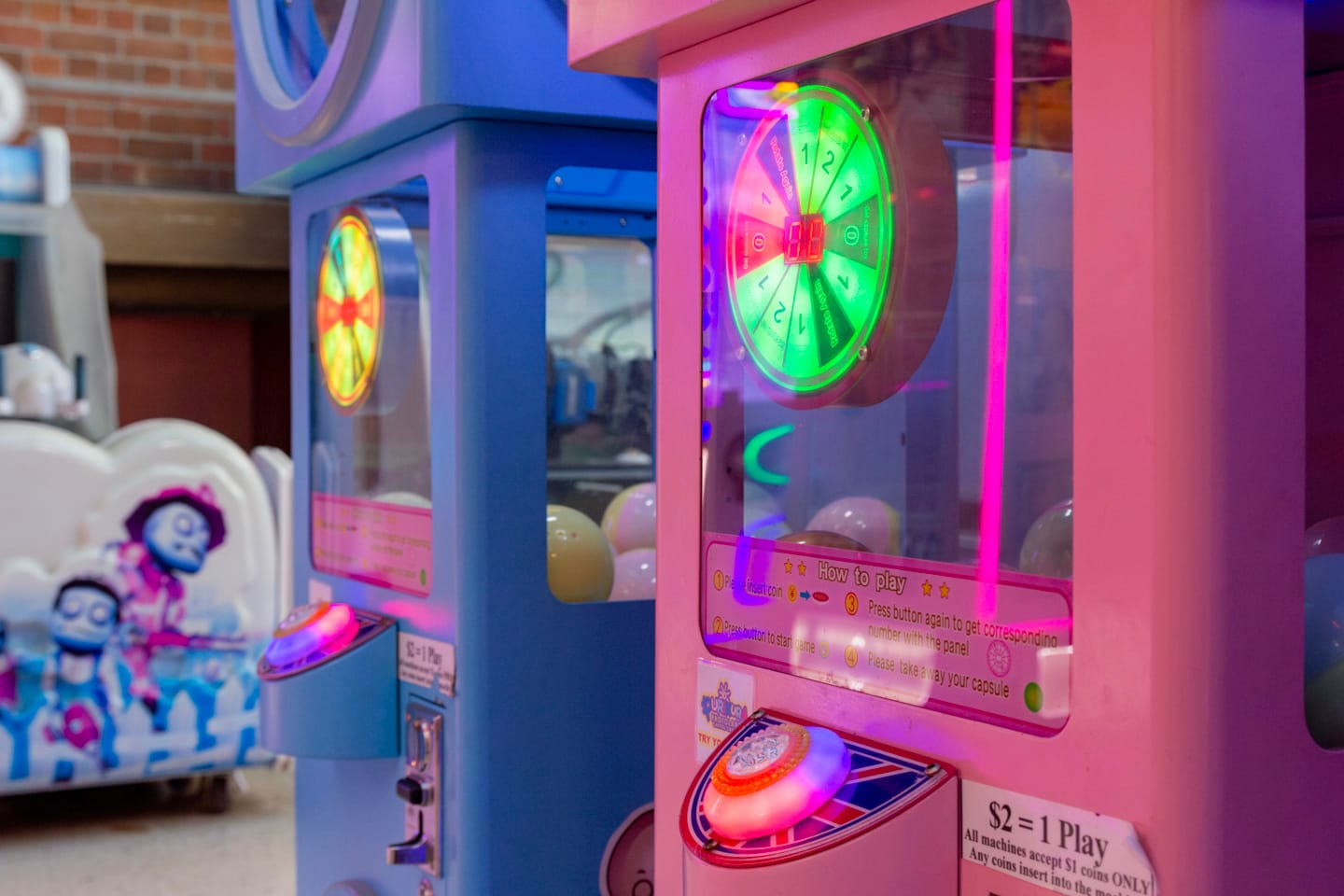
As for the insert-coin-and-crank machines, there’s Gacha Gacha, less a store and more a wall, where their immense variety of offerings (no, really, there exists a collection of mini models of server racks) can be found spread here and there all around Sydney. As in, not just only in the CBD, but also out of it.
If you want something more concrete and has a by-fans-for-fans quality of service, Isekai Anime runs a specialist store for “gacha”, in both naming sense of the machine and a video game genre with a specific monetisation system (i.e. merchandise from these titles). Like Hama and Happy Cap, it’s a name that was brought to my knowledge through anime conventions.
They’re situated on the corner of the north end of Chinatown’s Dixon Street and Liverpool Street in the Commerce Buildings.[3] Anything more anime-adjacent would fall within the realms of just going to places like A@A, Kaika, or the good ol’ Kinokuniya.
Other Games & Comments
That’s all I have to say about locations; the rest of this article is more of a reminiscent piece of those games.
Coin Pushers
Spin Fever 2 and Monopoly The Medal 2, both medal pushers, gave us a slim chance of making a tiny bit of store credit. This is because medals could not only be purchased, but also redeemed. When these games once existed at Galaxy World George Street, we used to take turns playing at a seat whilst waiting in queue for DJMax Technika or DDR.
However, the time and commitment required to go through a complete round of a coin pusher game, what with all the convoluted steps and phases, did not align with the rhythm game queue. We swapped between our friends and kept each other in the know on how far we were. Something along the lines of, “Yeah, I’ve collected all three coloured balls, filled the gauge, maxed out the stock, and now we’re just grinding to reach the small wheel.”
If a player at a seat made it far enough to the big wheel, everybody at the other seats would stop playing and watch as the various props inside the cab jiggled and spun around to grab our attention. We were all in it cheering together for the ball to land on the jackpot. “Shit, he’s down to one shield left on both outs – oh fuck, that one’s gone too. Reckon he’s still got it?”
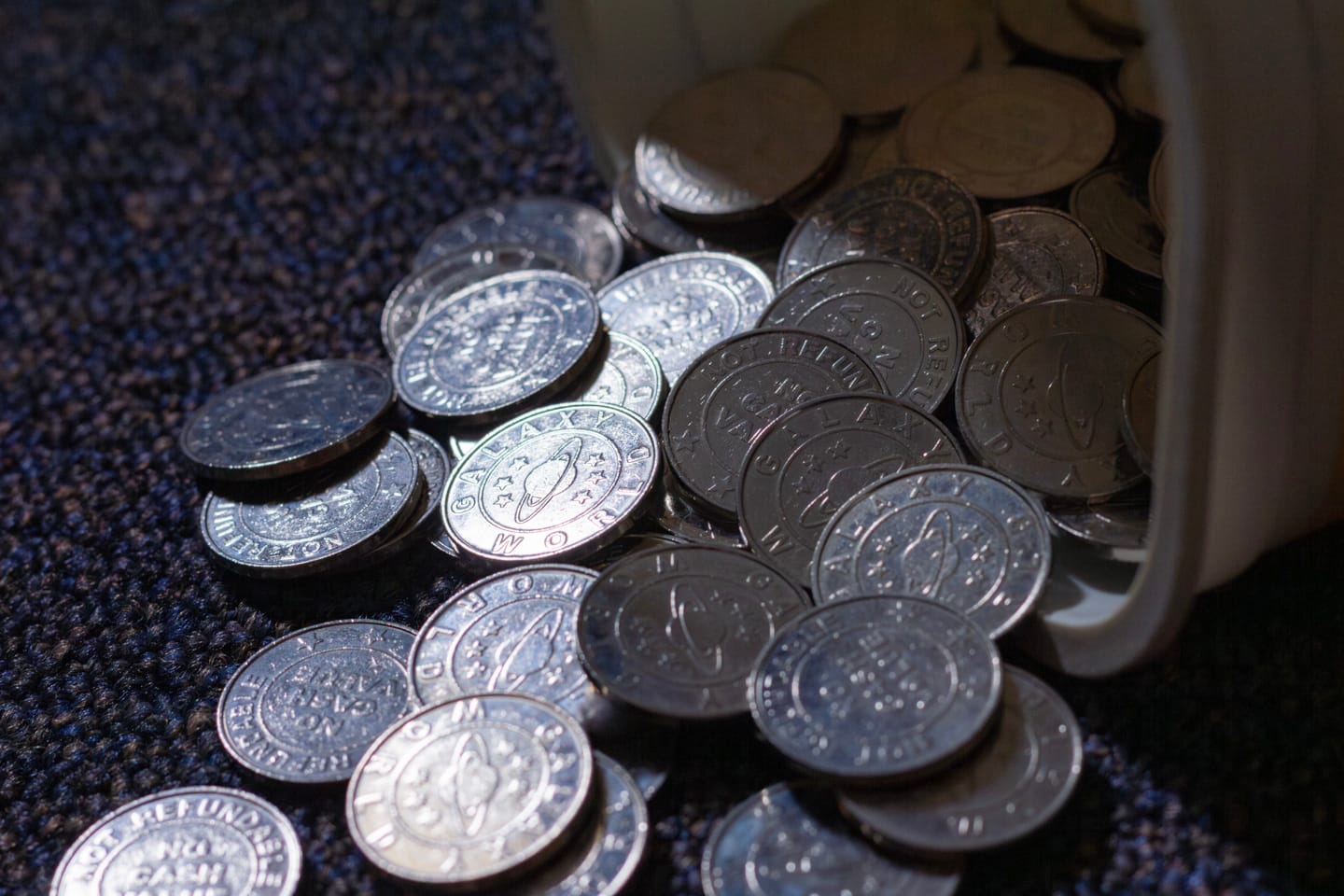
Today, these types of games still exist, but the medals are often an indirect means to push cards with digital prize ticket values rather than manipulating the amount of medals in your inventory, so there’s practically no incentive left for us. And, as you can probably figure, arcades did that for a real good reason.[4]
But, should there be a prize you’re interested in redeeming,[5] then coin pushers can be a slow but sure method of getting tickets… so long as you know how the game works.
Free Games
The Timezone franchise provides a loyalty VIP system that comes with perks, the main one being about a 10% discount on all games.
At George Street’s old branch, there was another perk where you could purchase a genre “pack”, which granted 15 games for $16 on that specific genre (say, rhythm), to play within a week.[6]
The biggest perk, however, is free games. Back then, provided you recharged at least some amount within a certain period of time, you were entitled to one daily free game for gold members, or two for platinum.
Now, you might have noticed that Timezone venues sort their games into categories based on the colour of their swipers. For instance:
- Red swipers give tickets.
- Green swipers are attraction games – the flashy ones like Dragon Punch or King of the Hammer. ‘Games’ in this context means player experiences with no tickets or prizes.
- Blue swipers are what we like to call “premium” games, which usually consist of anything new, the latest title in its series, or simply if it’s connected online. Most importantly, blue games are not eligible for free games.
- Yellow swipers are, by contrast, the “pleb” games, which are anything old and last generation, or out of date. With some exceptions, a blue swiper’s online service ending usually spells demotion to yellow.
It should come as no surprise that the games that gave us reason to go to an arcade in the first place were all blue swipers. DJMax Technika was relatively newer and an online game – permanently blue. When the DDR X cab changed into an ITG convert, it was considered “new” – blue. Maxi Tune when it upgraded from 3DX to 4 – blue. Online white DDR cab debut to replace ITG – without a doubt blue.
…Mentioning these points, I think you can tell what I’m getting at here.
•
A rhythm pack was sufficient to be eligible for free games, but due to the somewhat sly rule that genre pack swipes take precedence over free games, that meant I had to spend that free game on something else not rhythm games. So what was available?
Light Gun Games
In the corner of the room next to the basketball hoops behind a pillar was Time Crisis 4. I’ve played this many times in the past across the road at Galaxy World, usually when someone has left a credit on it.
The staple 1-2-3 pattern of shooting and navigating between enemies, keeping the combo bar filled at all costs, was a thing I managed to get really good at… in the prologue. Once Captain Rush came to navigate us through the building corridors, that’s when all bets were off. I had to start learning when exactly not to come out of cover eating shit because I’d just poked my head out straight into a flying axe.
The furthest I’ve ever made it with one continue (a leftover credit plus my free game) was Marcus in Stage 1, slinging himself around à la Spiderman whilst sending a tram sliding down the hill, threatening to possibly end the game.
Razing Storm was another favourite, because unlike Time Crisis, this game gave a bit of leniency half a life at a time if you played well. A friend who mains Tekken 6/Tag Tournament 2 and Street Fighter 4 uses his free games on this, almost managing to one credit clear it. I’d watch him play whilst waiting for my next rhythm game turn to see how far he can go.
But the one thing I do really miss, as there wasn’t one in Timezone, is The House of the Dead 4. Similar to Time Crisis, I had a good gist of all the enemies that showed up. I shot the chute boxes, threw a grenade into the right side room, and did the left-right sway on or just below the cancel bar to defeat Justice. Then, I’d blow all four or five lives on the next stage because it was foreign to me.
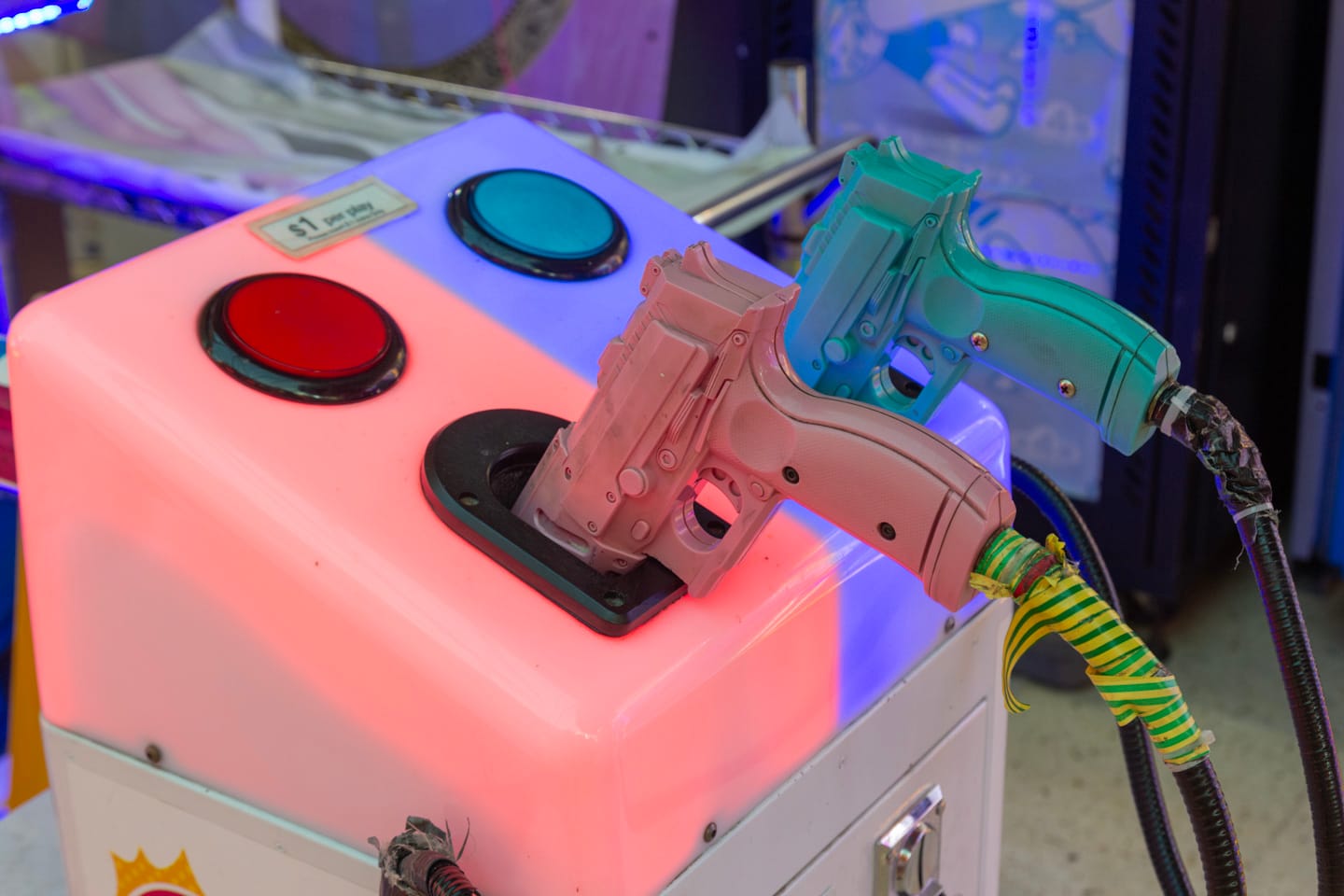
Today, you’ll be able to find games like Time Crisis 5 and Point Blank X scattered all around town. However, a glance over the shoulder watching others play shows TC5 seems to have departed a fair amount from the gameplay that we’ve come to know.
PBX, being a remaster and including the original levels from the earlier games, has a 90s CGI aesthetic that looks and sounds too… ‘new’ for what we’ve come to know of it as. Also, the whole-screen flash upon every shot, plus the strobing HIT! indicator, were removed and slowed down a lot because these would never fly in today’s video games. But, admittedly, that (and the appeal of mini-games) was what brought the game to my attention when I was a kid.
A light gun game would usually take about several minutes. Bang for buck (not that there was any buck in the first place), it wasn’t as great as some other games. Like…
Pinball
Now, I’m no expert at pinball; I just pretend to think I’m one by utilising individual techniques: skill shots, understanding the ruleset, single-mindedly aiming for multi-balls because moar ball = moar score. But it was enough to drag myself over the line for a replay or special, extending one game into potentially three or even more.
But who knows? Regardless of all that skill, maybe your score gets matched and you end up earning yourself a consolation THOCK! Getting a chance to hear the knocker trigger broadcasting to scaring the whole room is honestly in itself worth spending the free game on.
Plus, those extra games were more often than not passed on to a stranger because you didn’t have the time to stay around to play them all. Sure, finding three free credits on Big Buck Hunter was always a joy. But paying it forward, watching a kid run over to the cab after you’ve tapped them on the shoulder to say “free game btw”, brought a higher form of happiness.
I’ve heard of Beercade in Redfern and Astro’s Arcade Bar in Newtown, both hosting a variety of pinball machines and Time Crisis 2 (Astro’s also got Point Blank 2), but my arcade heart is loyal to rhythm games. Perhaps this my calling to give Pac-Man a go?[7]
Nostalgia at a Deeper Level
One of the workers at Puri told me SEGA’s Dream Palace II, a cabinet from 1998, was one of their most prized machines due to how difficult it was to import it into Australia. A quick cursory search on YouTube showing someone recording the music from this machine would suggest even this cab is rare in Japan itself. Translations mine:
日本ではもうプレイできないしすごく貴重な動画ですね […]
You can’t play this in Japan any more, so this is quite the precious video […] (@アンチ要塞-x4v, video by いとそん)
これって海外のパレスですよね!!所々状態が悪いところもありますが2台あるのがすごい…
These are overseas Palaces!! Some parts of it here and there are in a bad state, but having two of them is incredible... (@G_ONEHG, video also by いとそん)
And it certainly is going to be one hell of an equally difficult task to move those huge cabinets back out of there.
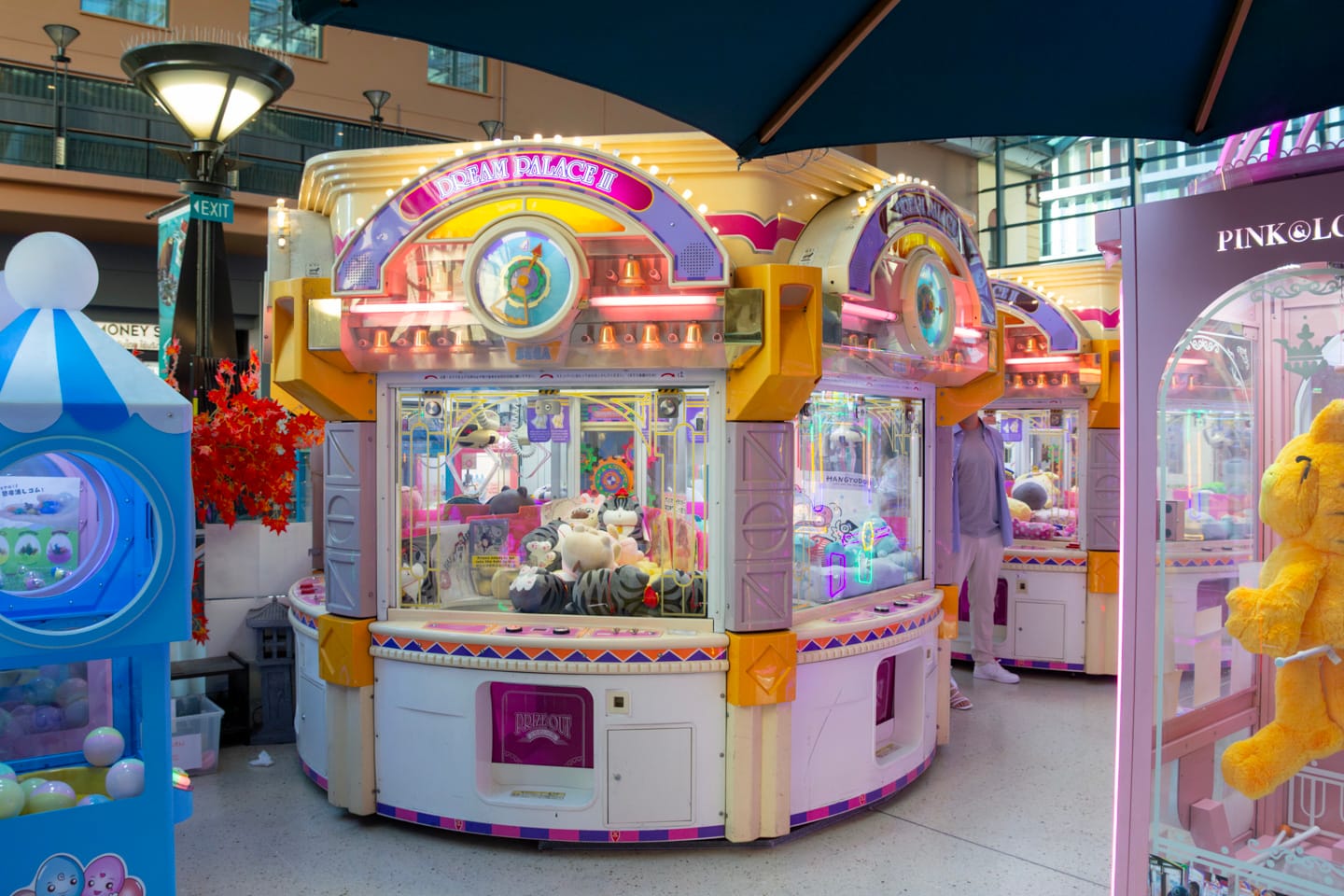
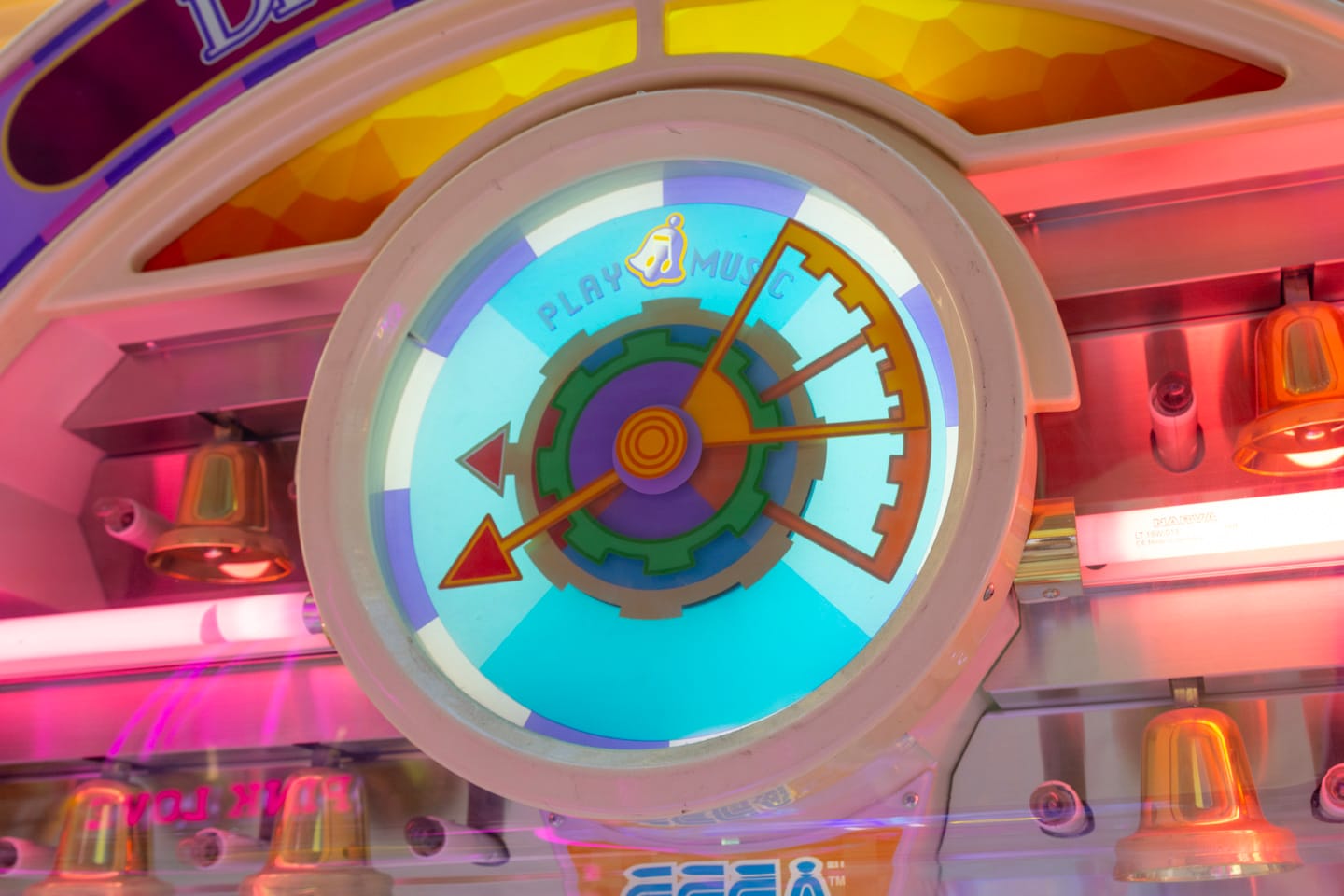
the jp crew emphasises archiving and listening to the audio used by these machines as their form of nostalgia
Taking a step back and looking at what I’ve covered in all these three parts, I find myself thinking all of this is extravagant indulgence in observing the scarcity principle. You never miss the water, as the proverb goes.
But there’s an inherent responsibility to feeling nostalgia. In the first part, I say that we shouldn’t look at the past to project the future’s potential in a pessimistic or fruitless way, lest it be potentially thought of as escapism. Instead, we should be thinking positively on it. Though, why stop there?
I’m personally in no position to step up to fill the specific gaps Puri has left for the community to potentially inherit and make even better. But with my involvement in games (albeit brief), software development, and other creative endeavours, I hope to make something – ideally within this lifetime, as limited and short as we all know it is – that the next generation can play, experience, and look back upon. Or maybe even be inspired to do the same thing themselves and keep that chain going.
…As cliché as altruism goes.[8]
[1] I’ll take a stab at an analogy: say you’re reporting to the tech a flash lamp needs replacing.
So they buy a new one without checking the specs and end up installing a super bright, 6500K lamp instead of a 3500K like all the rest. Then, when people point out one corner of the photo has a strong, odd shade of blue, they decide the solution is to either replace all the rest of the lamps with the bluer ones (which throws off the colour balance) or they put orange cellophane behind the diffuser to compensate because “it’s cheaper and does the job”… 🤦🏻
“Nahh, surely that’s an exaggeration,” you say. But I’ve witnessed a similar situation like this happen with a rhythm game cabinet.
[2] In Melbourne, one of the top high-level DDR players is a technician manager for Timezone, so the community there are eatin’ reeeal good. Here in Sydney, Timezone hasn’t quite yet found a local candidate who has intricate knowledge of these games who is willing to work for them.
[3] Incidentally, this building seems to be home to a fair amount of Japanese businesses, of which some I frequent: such stores would include Hondarake, the second hand bookstore with prices Kinokuniya probably wouldn’t want you to know about, and blu :/ creativity, a hair salon I used to go to when one of the hairdressers who I’ve been with for a very long time used to work there.
[4] One of our friends has the timing for the last five floors of Crazy Tower down pretty consistently, such that I’m quite sure the prizes he’s redeeming is putting the arcade at a loss. Imagine what an advantage it would be if the game paid out the jackpot in redeemable credits – for a game that only takes minutes to complete.
[5] Don’t knock ticket redemption prizes before you’ve seen what’s possible. Sure, Timezone’s range might be underwhelming, but have you seen the stuff Koko has on offer? (Provided you’ve determined that it’s worth your precious time collecting that many tickets in the first place, of course.)
[6] At $1.07 a game, you could play those games that would otherwise cost anywhere from $2.20 to $2.80 and upwards. Today, that would be considered insane value for games like maimai or Maxi Tune, so it’s no surprise they would stop that deal when online cabs were a thing; these games collect a small commission for every credit played.
Additionally, as George Street’s venue is small (go to the CityHeroes upstairs opposite the cinemas if you want to see its size), a genre’s pack usually only provided at most three titles to choose from. At one stage, the only game that worked with the rhythm pack was ITG, so it could’ve been treated as if you were paying for the entitlement of 15 ITG credits.
Speaking of, they also had a bigger “high baller” gold genre pack, named because it was exclusive to gold or higher members. Here, everything was roughly doubled: number of games, expiry and cost – making it closer to around 80-something cents a swipe. The details escape me, and a brief search for it actually yielded no results; this was looking likely to be an Internet Archive-deep investigation.
[7] Some could argue Pac-Man is a rhythm game where certain levels are variations of a few charts. Just like how Genichiro in Sekiro is the first proper chart!
[8] I once attended a workshop during uni days where one of the icebreakers were to talk about what one’s purpose was. My biggest surprise at the time was finding out how a huge majority of the purposes that were shared around were about serving others, rather than oneselves.
maturity & social-based purposes: an opinion
I honestly thought I was witnessing a meme play out in real time.
What I saw (felt?) was something like a veil of professionalism. There seemed to be an unspoken fear in the room that by saying one’s purpose was to refine themselves, it might’ve been seen as immaturity (“before one can [verb] others, one must first [verb] themselves”, blah). Plus, if everyone is saying it, you should too, otherwise you’re not doing yourself a favour “blending in”. As a result, some people shoehorned in a purpose that “fit the room”, so to speak.
But here’s the thing: those who did that the most were fresh high school graduates. Not that I would know if they’ve actually had years of various experience as a teenager, but in my mind I thought either I was in a room full of prodigies and speedrun-tier learners, and that I’m the sore loser here, or I was in a room full of insecure people who couldn’t display some sense of vulnerability – the true sign of maturity.
Somewhere within that activity, I wondered whether this really promoted the right sort of thinking about our lives, or if it was even mentally healthy for those who were unsure about their purpose. Like, it’s not about personal versus social, because I figured a good answer would consist of a fine balance of both. And given we had to make up our mind on one on the spot, neither did my “interesting” (derogatory) answer feel solid or significant. So I didn’t take it too personally or seriously at the time.
However, what was useful was the mentality that we had something to work with, and were encouraged to explore and change our purpose if we realise it doesn’t fit us. For some, there might never be one concrete one – but that fact alone shouldn’t be stigmatised as much as this group’s vibe wanted you to think.
That’s a story for another time, but my point is that wanting to “pass it on” can start to lose its credibility and feel a bit trite, so I just wanted to call that out.
I really do mean it when I say I want to give back in due course, but it’s just like… well, don’t we all? Even though it is one of my endgame goals, it’s not my current one. Hence the ‘due course’ bit.